Freedom Versus Functioning as the Goal of OCD Treatment: Reframing Exposure and Response Prevention and Its Use to Help Patients Overcome Their OCD Diagnosis
In this presentation, Ryan Judd and Dr. Elizabeth McIngvale share their experience working in the field of obsessive-compulsive disorder (OCD) treatment. They discuss the use of exposure and response prevention (ERP) and how to avoid common pitfalls of this treatment. They also review the differential diagnosis and possible comorbidities of OCD that could affect treatment effectiveness.
This Menninger Department of Psychiatry and Behavioral Sciences Grand Rounds session took place on Wednesday, April 1, 2026 at 12:00 p.m. and has been approved for CME and Social Work credit.
Activity Information
How to Claim Credit
You may claim credit after watching this activity.
You will be redirected to the BCM DCPD credit management site when claiming credit and may be asked to register or log in.
Needs Statement
Psychiatrists, psychologists, psychiatric nurses, social workers, and healthcare professionals in related disciplines need to receive regular updates on advances in neuroscience, psychiatric research, psychotherapy, and the evolving best practices for evaluating, diagnosing, and treating psychiatric disorders. The series aims to improve clinical practice through critical appraisal of psychiatric research, the use of evidence-based treatment approaches, and the integration of multiple treatment modalities to enhance the quality of psychiatric care and improve patient outcomes.
Educational Objectives
At the conclusion of the session, the participants should be able to:
- Differentiate exposure and response prevention (ERP) models based on fear extinction versus approaching and targeting core fears to achieve optimal change.
- Apply advanced ERP strategies, including inhibitory learning and core fear work, to increase treatment efficacy and reduce relapse.
- Identify common misconceptions and pitfalls in ERP delivery (e.g., “fear factor” exposures, hidden rituals, thought suppression) that inadvertently reinforce obsessive-compulsive disorder.
- Utilize freedom-focused language and communication strategies that support patient autonomy, treatment engagement, and long-term recovery.
- Demonstrate greater understanding of common differentials for OCD and comorbidities and recognize when and why ERP may not be effective.
Target Audience
Professional Categories
- Physicians
- Medical Students
- Fellows
- Nurses
- Other Health Professionals
Specialties
- Psychiatry
Interest Groups
Activity Evaluation
Evaluation by questionnaire will address program content, presentation, and possible bias.
Educational Methods
- Lectures
- Case Presentations
- Literature Review
- Panel Discussion
Accreditation/Credit Designation
Baylor College of Medicine is accredited by the Accreditation Council for Continuing Medical Education (ACCME) to provide continuing medical education for physicians.
Baylor College of Medicine designates this enduring material activity for a maximum of 1.0 AMA PRA Category 1 Credit(s)™. Physicians should claim only the credit commensurate with the extent of their participation in the activity.
Social Work: The Baylor College of Medicine Division of Continuing Professional Development (License Number 7270) is an approved continuing education provider for Social Workers through the Texas State Board of Social Worker Examiners. This activity has been approved for 1.0 continuing education unit.
Activity Director
-

Kim-Lan Tran Czelusta, M.D.
Vice Chair for Education, Brown Foundation Chair in Psychiatric Education in the Department of Psychiatry and Behavioral Sciences
Baylor College of Medicine
Term of Approval
April 1, 2026 through April 30, 2028. Original release date: April 1, 2026.
Disclosure Policy
Baylor College of Medicine (BCM) is accredited by the Accreditation Council for Continuing Medical Education (ACCME) to provide continuing medical education (CME) for physicians. BCM is committed to sponsoring CE activities that are scientifically based, accurate, current, and objectively presented.
In accordance with the ACCME Standards for Commercial Support, BCM has implemented a mechanism requiring everyone in a position to control the content of an educational activity (i.e., directors, planning committee members, faculty) to disclose any relevant financial relationships with commercial interests (drug/device companies) and manage/resolve any conflicts of interest prior to the activity. Individuals must disclose to participants the existence or non-existence of financial relationships at the time of the activity or within 24 months prior.
In addition, BCM has requested activity faculty/presenters to disclose to participants any unlabeled use or investigational use of pharmaceutical/device products; to use scientific or generic names (not trade names) in referring to products; and, if necessary to use a trade name, to use the names of similar products or those within a class. Faculty/presenters have also been requested to adhere to the ACCME's validation of clinical content statements.
BCM does not view the existence of financial relationships with commercial interests as implying bias or decreasing the value of a presentation. It is up to participants to determine whether the relationships influence the activity faculty with regard to exposition or conclusions. If at any time during this activity you feel that there has been commercial/promotional bias, notify the Activity Director or Activity Coordinator. Please answer the questions about balance and objectivity in the activity evaluation candidly.
All of the relevant financial relationships listed for these individuals have been mitigated.
Disclosures
The following individual(s) has/have reported financial or other relationship(s) with commercial entities whose products/services may relate to the educational content of this activity:
Presenters
-
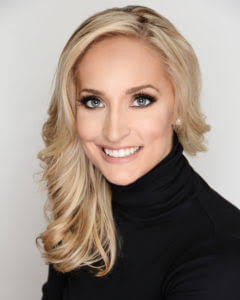
Elizabeth McIngvale, Ph.D., CSW-S
Adjunct Faculty Menninger, Department of Psychiatry and Behavioral Sciences; Director of The OCD Institute of Texas
Baylor College of Medicine, The OCD Institute of Texas
Disclosure:
Nothing to disclose.
-

Ryan Judd, LCSW-S
Clinical Director and Behavior Therapist
The OCD Institute of Texas
Disclosure:
Nothing to disclose.
Activity Director
-
Kim-Lan Tran Czelusta, M.D.
Vice Chair for Education, Brown Foundation Chair in Psychiatric Education in the Department of Psychiatry and Behavioral Sciences
Baylor College of Medicine
Disclosure:
Nothing to disclose.
Planning Committee Members
-
Kim-Lan Tran Czelusta, M.D.
Vice Chair for Education, Brown Foundation Chair in Psychiatric Education in the Department of Psychiatry and Behavioral Sciences
Baylor College of Medicine
Disclosure:
Nothing to disclose.
-

Danielle Egbe, D.O.
Psychiatry and Behavioral Sciences Resident
Baylor College of Medicine
Disclosure:
Nothing to disclose.
-
Mauro A. Garcia-Altieri, M.D.
Assistant Professor
Baylor College of Medicine
Disclosure:
Nothing to disclose.
-
-
-
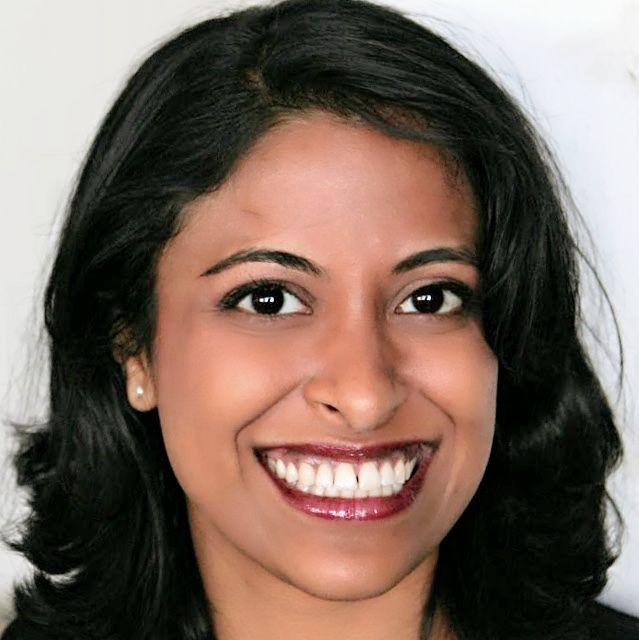
Sindhu Idicula, M.D.
Associate Professor of Psychiatry and Behavioral Sciences; Director of Psychotherapy Education
Baylor College of Medicine
Disclosure:
Nothing to disclose.
-
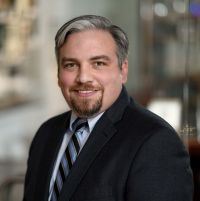
Jeffrey Steven Khan, M.D.
Associate Professor of Psychiatry and Behavioral Sciences
Baylor College of Medicine
Disclosure:
Nothing to disclose.
-
Ashley W. LeMaire, Ph.D.
Assistant Professor
Baylor College of Medicine, Menninger Clinic
Disclosure:
Nothing to disclose.
-
Patrick O'Malley, M.D.
Assistant Professor
Baylor College of Medicine, Texas Children's Hospital
Disclosure:
Nothing to disclose.
-
Ujval Pathak, M.D.
Psychiatry and Behavioral Sciences Resident
Baylor College of Medicine
Disclosure:
Nothing to disclose.
-

Lindsey S. Pershern, M.D.
Associate Professor of Psychiatry and Behavioral Sciences
Baylor College of Medicine
Disclosure:
Nothing to disclose.
-

John Saunders, M.D., M.S.
Associate Professor
Baylor College of Medicine
Disclosure:
Nothing to disclose.
-

Daryl Shorter, M.D.
Associate Professor, Medical Director of Addiction Services
Baylor College of Medicine
Disclosure:
Nothing to disclose.
-
Katelyn Tate, D.O.
Psychiatry and Behavioral Sciences Resident
Baylor College of Medicine
Disclosure:
Nothing to disclose.
-
Saumia Thomas, M.D.
Child Psychiatry Administrative Chief
Baylor College of Medicine
Disclosure:
Nothing to disclose.
Health Topics
Presenters:
Elizabeth McIngvale, Ph.D., CSW-S
Adjunct Faculty Menninger, Department of Psychiatry and Behavioral Sciences; Director of The OCD Institute of Texas Baylor College of Medicine, The OCD Institute of Texas